The Neuroscience of ADHD in Professional Women with Dr. Jennie Byrne
You've probably Googled "do I have ADHD" at least once. Maybe more. Maybe at 11pm while your kids were finally asleep and you were lying there wondering why your brain works so differently from everyone else's.
If that's you, this episode is for you.
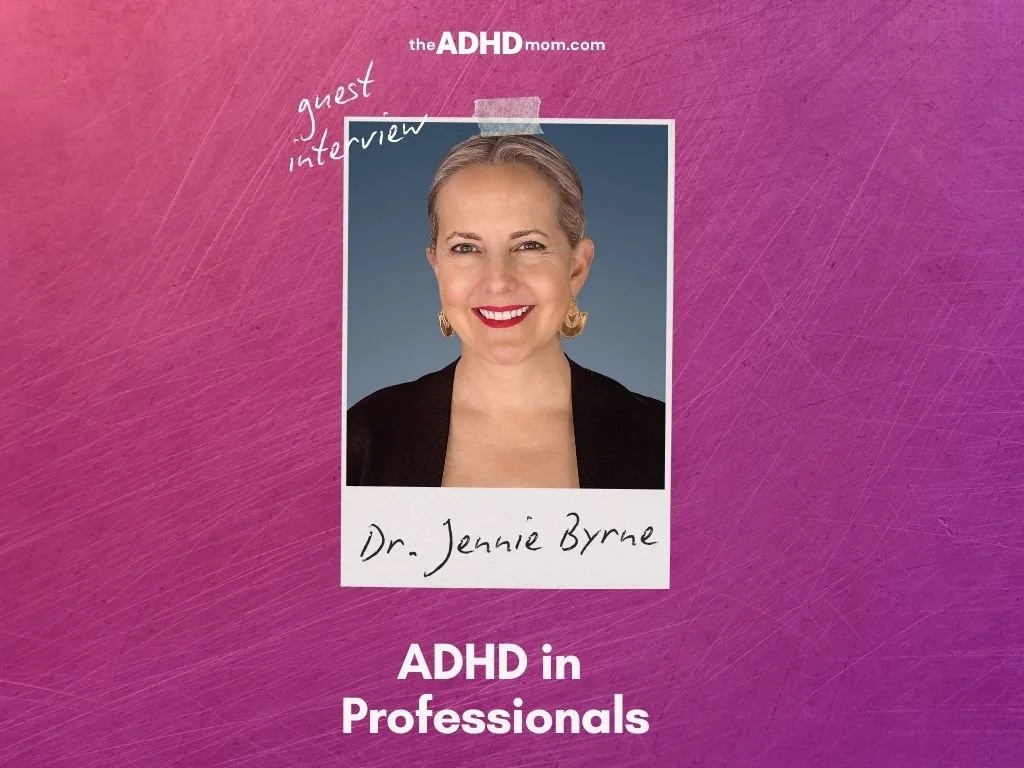
Dr. Jennie Byrne is a psychiatrist and neuroscientist with an MD and a PhD in cognition and attention. She has spent the last 20 years working specifically with high-achieving professionals who have ADHD. Women who look great on paper. Women who are told "you can't possibly have ADHD" because they made it this far.
She's also a mom. And she gets it.
Her new book, ADHD in Professionals: Embracing Your Brain, is exactly what it sounds like. A real, practical, science-backed guide for the person who has been quietly white-knuckling it through life and wondering why everything feels so hard.
We had a great conversation. Here are the things that stayed with me.
You are not too high-functioning to have ADHD.
Dr. Jennie hears it constantly. Doctors, lawyers, executives, and business owners told, "You never would have made it this far if you had ADHD." And they walk away without answers, without support, and with one more reason to doubt themselves.
The reality is that ADHD looks different in high-achieving adults, especially women. Masking is real. Coping is real. And the cost of both is enormous. The external performance doesn't tell the whole story. What's happening underneath does.
Your brain is a variant. Not a defect.
Dr. Jennie has a PhD in attention. When she talks about the neuroscience, she doesn't nerd out in a way that loses you. She brings it back to your actual life
Here's what she shared: ADHD affects about 5 to 10 percent of the adult population. When researchers look at the ADHD brain, they see structural and functional differences, particularly in the frontal lobe, which handles executive function. The pathway that lets you decide "I'm going to focus on this thing right now" is simply built differently.
There's also something called the default network. It's the mode your brain goes into when it's making connections, wandering, and creating. The ADHD brain has a harder time switching in and out of that mode. Which is why task-switching is so depleting. And why someone walking into your workspace mid-thought can feel like they just pulled the plug on everything.
This is not a discipline problem. It is a wiring difference.
The assessment process is a mess. Here's what to look for.
One of the most practically useful parts of our conversation was about getting a real assessment. Because most people don't get one. They go to their primary care doctor, they get a shrug or a wrong diagnosis, and they leave more confused than when they came in.
Dr. Jennie recommends three things in an assessment:
First, a clinical interview. Someone who actually sits with you and learns your history. Not just "tell me your symptoms" but the full picture, including sleep, anxiety, medication, how technology is affecting you, childhood patterns.
Second, a standardized executive function rating scale. One that also asks someone who knows you well to weigh in. Because how you're functioning in real life matters more than how you perform on a test.
Third, a computerized test of attention. Something that gives baseline data. This helps determine how much your symptoms are actually affecting your functioning and what tools, including whether medication might help, could be most useful.
Her advice: skip the primary care doctor for this. Skip the general psychiatrist. Look specifically for someone who explicitly says ADHD is their specialty. An ADHD coach is also a surprisingly good starting point because they often have a network of specialists they can point you toward.
The dinner story.
Dr. Jennie shared a story about a client. Mom, professional, doing great at work, coming home and falling apart. Crying multiple times a week. Dreading the evenings. She was thinking about leaving a job she loved because she didn't know what else to change.
When they dug in, they found it. She was spending two hours a night making dinner. And her family was complaining about it. Every night.
So they redesigned it. She switched to pre-prepped meals that took 15 minutes. She sat her family down and said, if you don't like dinner, make a sandwich. Complaints are off the table.
Her evenings changed completely.
This is what the design move actually looks like. Not a big overhaul. Not a productivity system. A specific point of friction, named and removed. Two hours of dread, gone.
She almost left her job. The problem was dinner.
You're probably masking at work and falling apart at home. That's not a coincidence.
Dr. Jennie explained something I hadn't heard framed this way before. A lot of ADHD treatment focuses on work and productivity. But the emotional dysregulation piece, which most people with ADHD experience, often doesn't show up at work. It shows up at home.
You've spent all day managing, masking, coping. You get home. Your guard drops. And that's when the exhaustion hits.
If you're also on stimulant medication, it's often wearing off right at 5pm. Exactly when the evening marathon begins. It is a timing and design problem.
Your life is full. You're not just busy.
We ended the conversation in a really good place. Dr. Jennie talked about the word "busy." How it's a cultural reflex we reach for without thinking. Her challenge: go one week without using the word busy when someone asks how you're doing.
Her reframe was simple. "My life is full. By choice." Busy implies out of control. Full by choice implies ownership.
Where to find Dr. Jennie:
You can find her on LinkedIn and YouTube. For assessments and coaching, her practice is at constellationpllc.com. She's licensed in 24 states and does coaching anywhere. Her book, ADHD in Professionals: Embracing Your Brain, is available now.
And if you're a parent navigating this for your kids as well as yourself, she also recommended Dr. Nerissa Bauer and her program, Teach Me ADHD, as a great family resource.
This one is worth a full listen! Listen to the episode.
