Why ADHD Moms Need Less Noise, Not More Products
As I sip coffee on our back deck, I listen to birds and open the Apple News app on my phone to catch up on what’s going on in the world. Bloomberg ran a piece by Kristen V. Brown called "The Menopause Gold Rush Is Failing Women." It opens with a woman in her early thirties. Chronic UTIs. Hot flashes that made no sense for her age. Her labs came back normal. Her doctor handed her an antidepressant. She said she started to think she was just crazy.

The industry built around problems like hers is enormous. Estimates put the menopause market at $18.7 billion right now, with some projections closer to $600 billion by 2030. Venture capital in women's health has more than tripled since 2019. Startups, supplements, hormone telehealth, all of it is growing fast.
And here’s what I found interesting: the money found the pain point years before medicine did. Doctors still aren't trained to recognize what's happening. Insurance still doesn't cover it well. Women are still walking out with a prescription that might have nothing to do with what's actually going on in their bodies.
In the article - one line stood out to me:
Women need less noise. Not more products. Less noise.
And this made me think about my own journey with ADHD.
I think we're watching the same story, just a few years behind. The ADHD apps market alone is somewhere around $2.2 to $2.8 billion this year, on track to hit $6.7 to $12 billion within the decade. $2.7 billion in venture capital has already been invested in ADHD solutions. The CDC counts 15.5 million adults in the US with an ADHD diagnosis, and almost half of them got that diagnosis as adults. Which means most of that market is people who spent decades without a name for what they were living with. Same as the menopause story. A system built around a narrower picture, in ADHD's case, hyperactive boys, missed everyone who didn't fit it. Women especially. Research on female ADHD still describes it as under-recognized and under-researched, even now.
And there's a version of the awareness engine here too. The #ADHD tag on TikTok has over 28 billion views. Some of that is genuinely helping women recognize themselves for the first time. Some of it is reportedly inaccurate, and it's moving faster than any clinic can keep up with. Telehealth ADHD prescribing is already facing the same kind of scrutiny hormone therapy telehealth is starting to face. Fast growth, thin infrastructure underneath it.
I'm not writing this from the outside looking in. I'm in both of these industries as a patient, not just as someone watching the numbers.
I'm a patient at Midi Health for hormone support. I take Vyvanse (well, the generic version, so insurance covers it), and it helps a lot. I take supplements too. What I'm curious about is whether I’m really helping myself or sucked into an advertising system, and that’s all? Well, it’s not so black and white. It's trial and error. Something works, something else doesn’t. It feels like a journey with no clear path forward, a dim light, and a broken compass. It’s a nuanced journey, different for everyone.
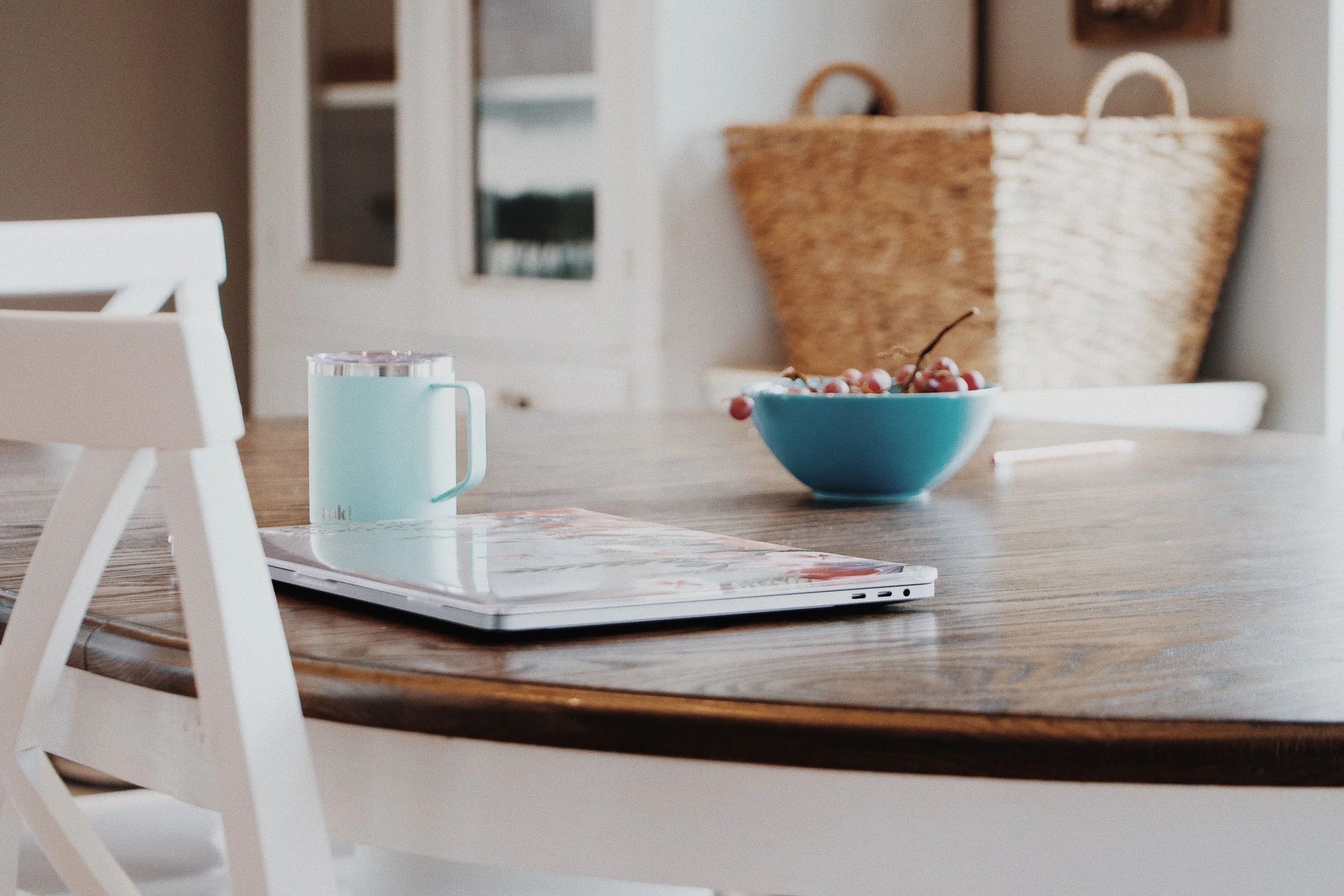
photo by Jessica Lewis - thepaintedsquare - my kitchen table :)
I've also been asking myself a different question than what to add next. I wonder if I need less. Not another supplement. Not another app. (Naps, not Apps!) Not another system to manage the other systems. Less input. Less noise. Fewer decisions asked of me in a day. Something in me thinks doing less would help, but I don't know how to do less as a mom working from home and raising ADHD kids. I don't know yet. I'm still finding out. Where is the balance? Am I doing this right? I keep wondering if design-thinking, not more and not less, but something more nuanced, is the path through this.
But I notice that both industries, menopause and ADHD, keep answering with the same word. More. More products, more prescriptions, more optimization. That's not a knock on my doctor, or on the clinicians actually trying to help inside a marketplace that's gotten loud and crowded. It's the industry built up around them I keep noticing, all the noise stacked on top of real care.
This is where it stops being only a hormone question or only a wiring question or only a diet/nutrition question for me. It becomes a design question. The medicine matters. Vyvanse matters. Estrogen matters. But so does everything else asking for my attention all day.
Maybe the answer isn't a bigger stack of things to try. Maybe it's pausing for a moment to allow enough space to actually feel what's happening in my body, mind, and spirit - without more noise piled on top.
Isn't it interesting that both roads, the clinical one and the quieter one, keep pointing at the same idea? That we were built for margin, yet the world keeps handing us more.
I'm not telling you hormone therapy is wrong. Mine helps. I'm not telling you ADHD medication is wrong. Mine helps too. I know there's a path through this without medication or hormone therapy as well, and that path is just as real. I'm just noticing two industries grow explosively around women's health, both promising to finally take us seriously, and I'm asking whether taking myself seriously might actually mean doing less, not doing more.
I don't have this settled either. I'm just noticing it. See what you notice in your own life.
Sources referenced
The Menopause Gold Rush Is Failing Women — Kristen V Brown, Bloomberg
ADHD Apps Market Size, Share & Trends Report — Grand View Research
Research advances and future directions in female ADHD — PMC
Founder of telehealth startup Done convicted in Adderall fraud scheme — Fierce Healthcare
Misinformation mayhem: the effects of TikTok content on ADHD knowledge, stigma, and treatment-seeking intentions — Schiros et al., European Child & Adolescent Psychiatry, Syracuse University
TikTok and Attention-Deficit/Hyperactivity Disorder: A Cross-Sectional Study of Social Media Content Quality — Yeung, Ng, Abi-Jaoude, Canadian Journal of Psychiatry, University of British Columbia
