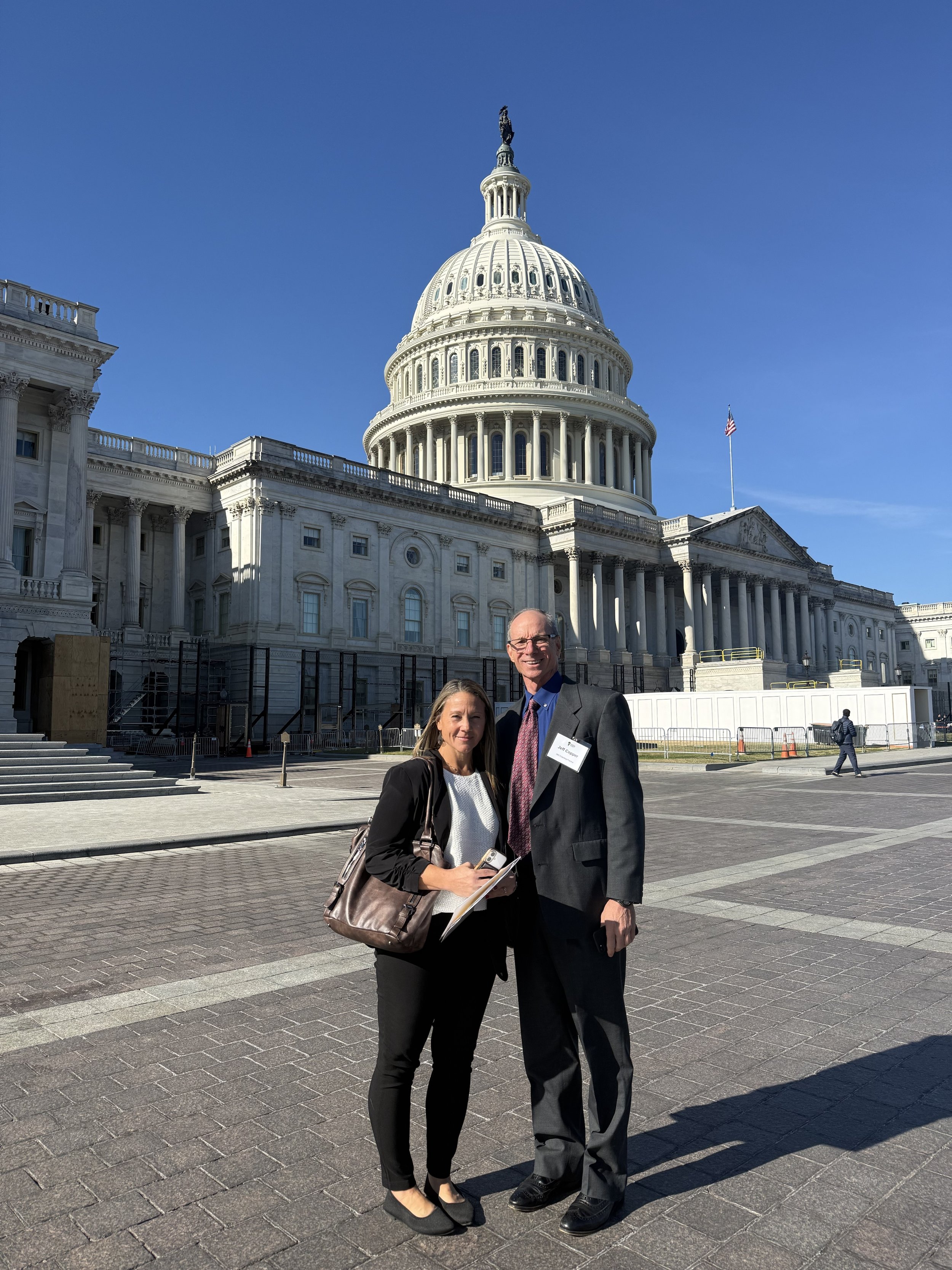
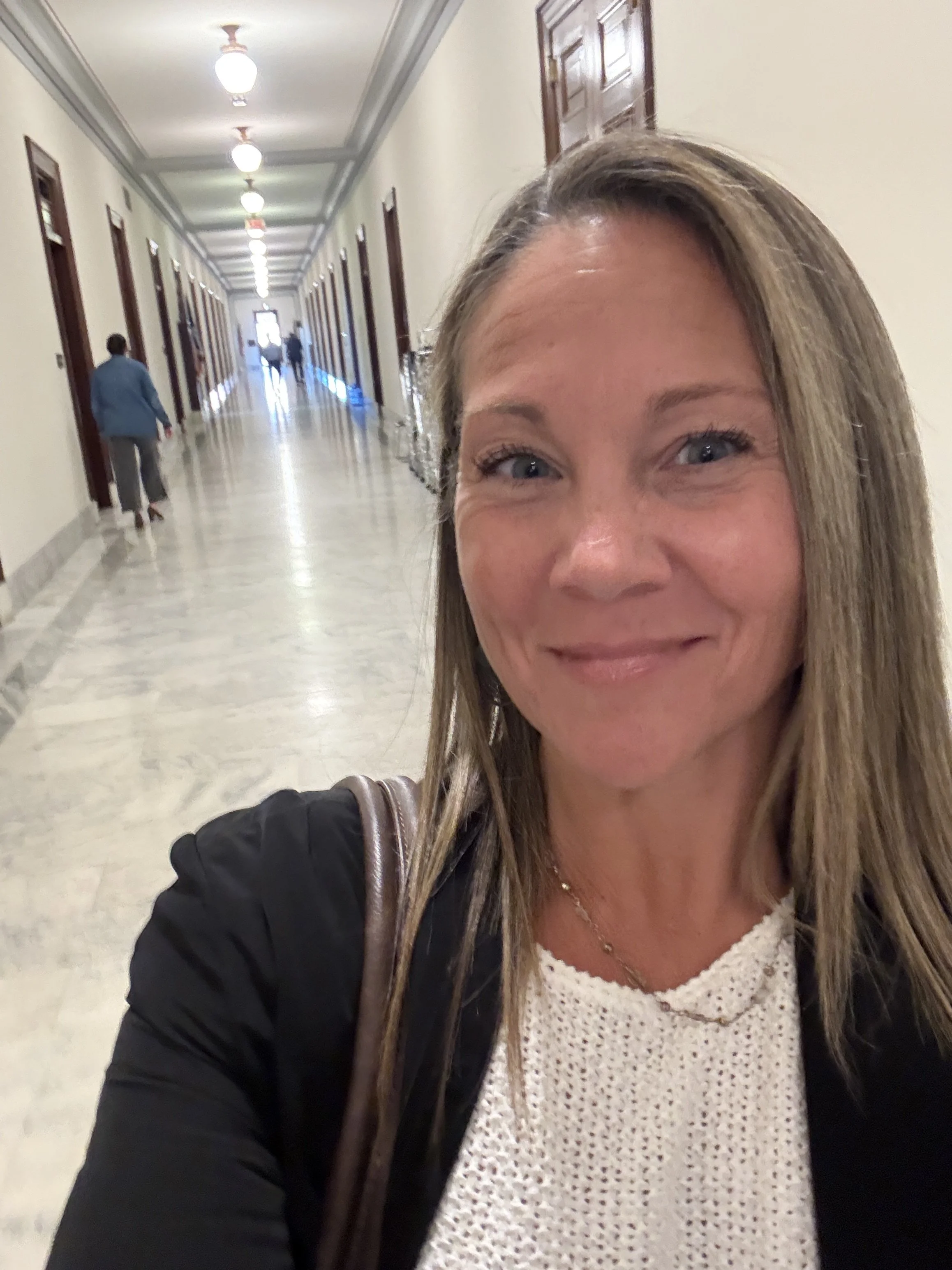
Most of my days look like packing lunch for school, getting kids on the bus, recording voiceovers for clients, picking up the house, doing laundry and dishes, and steadying the mental load of a family where more than one of us has ADHD. On Tuesday, November 17, my day looked different. I spent it walking the halls of Congress with a folder of talking points and one goal: make sure the people shaping health policy hear what ADHD care looks like from inside a family.
Who Mindful Choices for ADHD Is
Mindful Choices for ADHD is a nonpartisan nonprofit working to make sure people living with ADHD can get evidence-based, appropriate care. They bring together clinicians, researchers, caregivers, and people with ADHD to build consensus, counter misinformation, and push for practical solutions grounded in both science and lived experience.
I serve on their Steering Committee. This summer I sat on the panel for their first Congressional briefing. This trip was our in-person Hill Day: one evening of preparation, one long day of meetings.



Who I Went With: Jeff Copper
The Steering Committee split into small teams. My partner was Jeff Copper, an ADHD coach and self-described cognitive engineer from Florida. Jeff is the president of DIG Coaching and the host of Attention Talk Radio, where he has spent years interviewing the leading voices in ADHD.
His long-standing motto is "Don't try harder, try different."
If you've listened to this show for a while, you know why we got along.
We brought two different angles into every room. I brought the view from inside a family: a mom with ADHD raising kids with ADHD. Jeff brought his own experience with dyslexia and ADHD, plus what he sees working with adults every week: how a disruption in treatment ripples into work, school, and daily life.
Monday Night: Dinner and a Crash Course
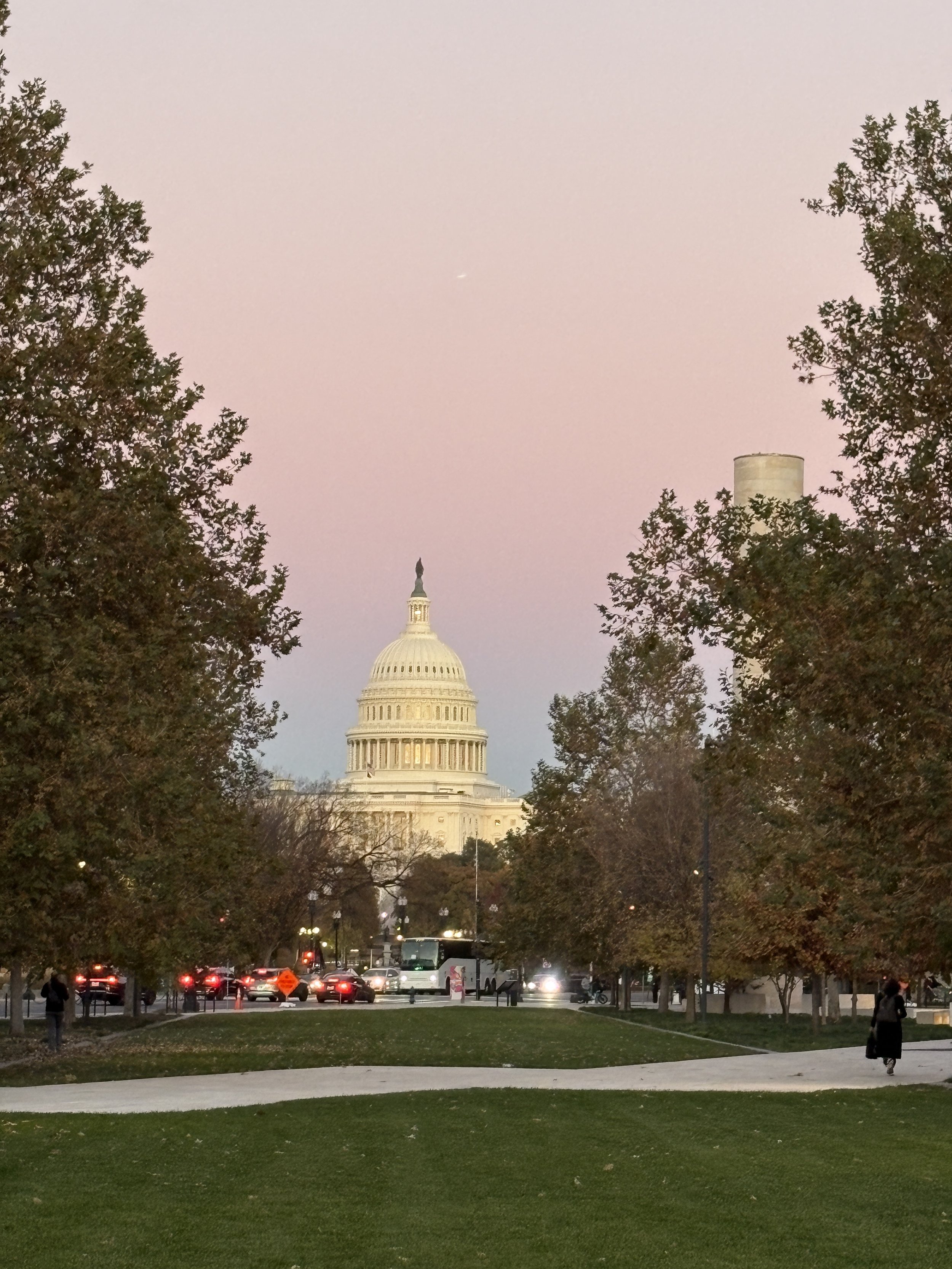
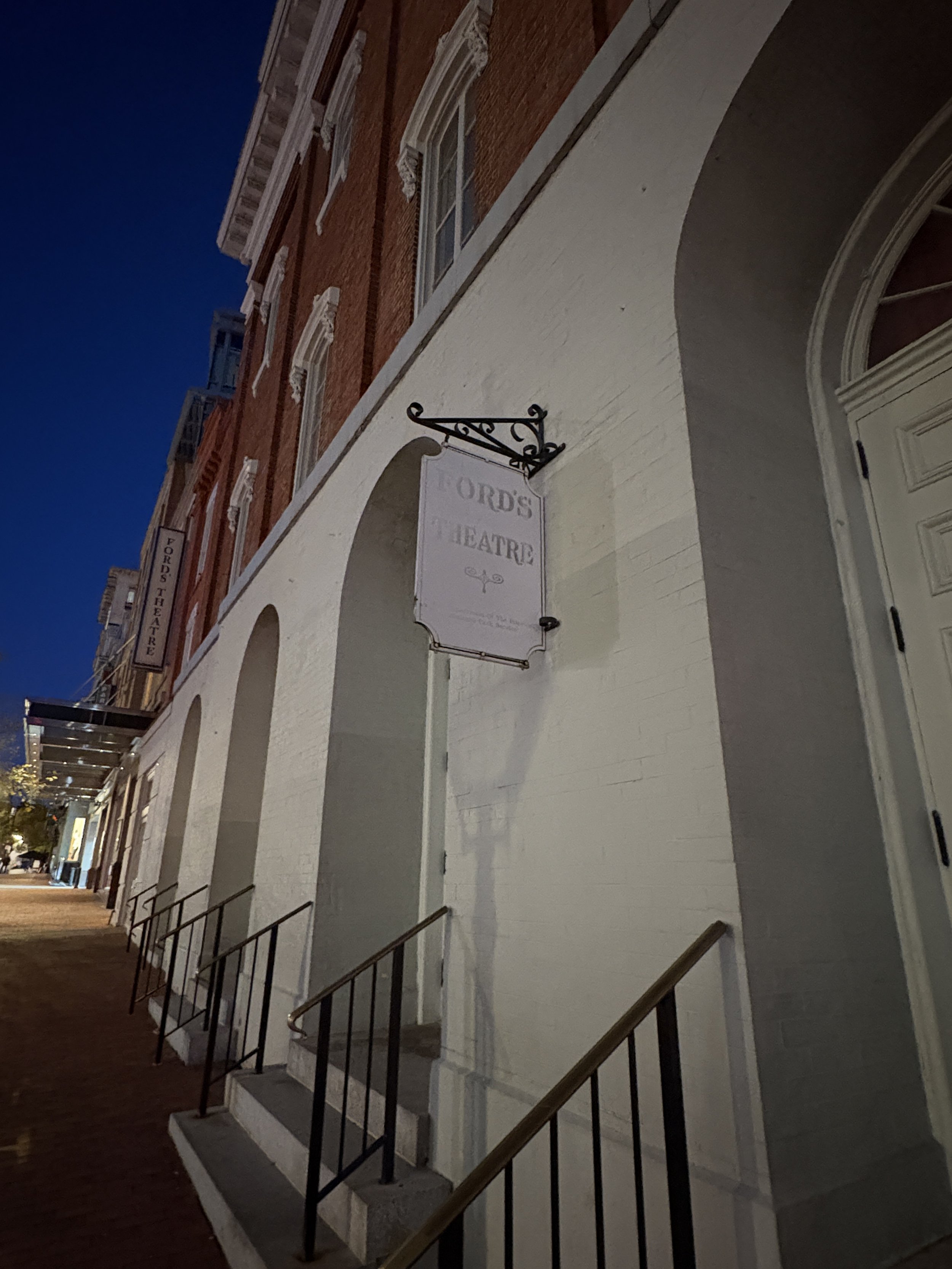
It was a quick getaway. My husband Dave, aka my chauffeur and tour guide, got me to the hotel with plenty of time for us to walk to my evening meeting and see DC at night. It's been a warm November, and I regretted wearing my heavy winter coat.
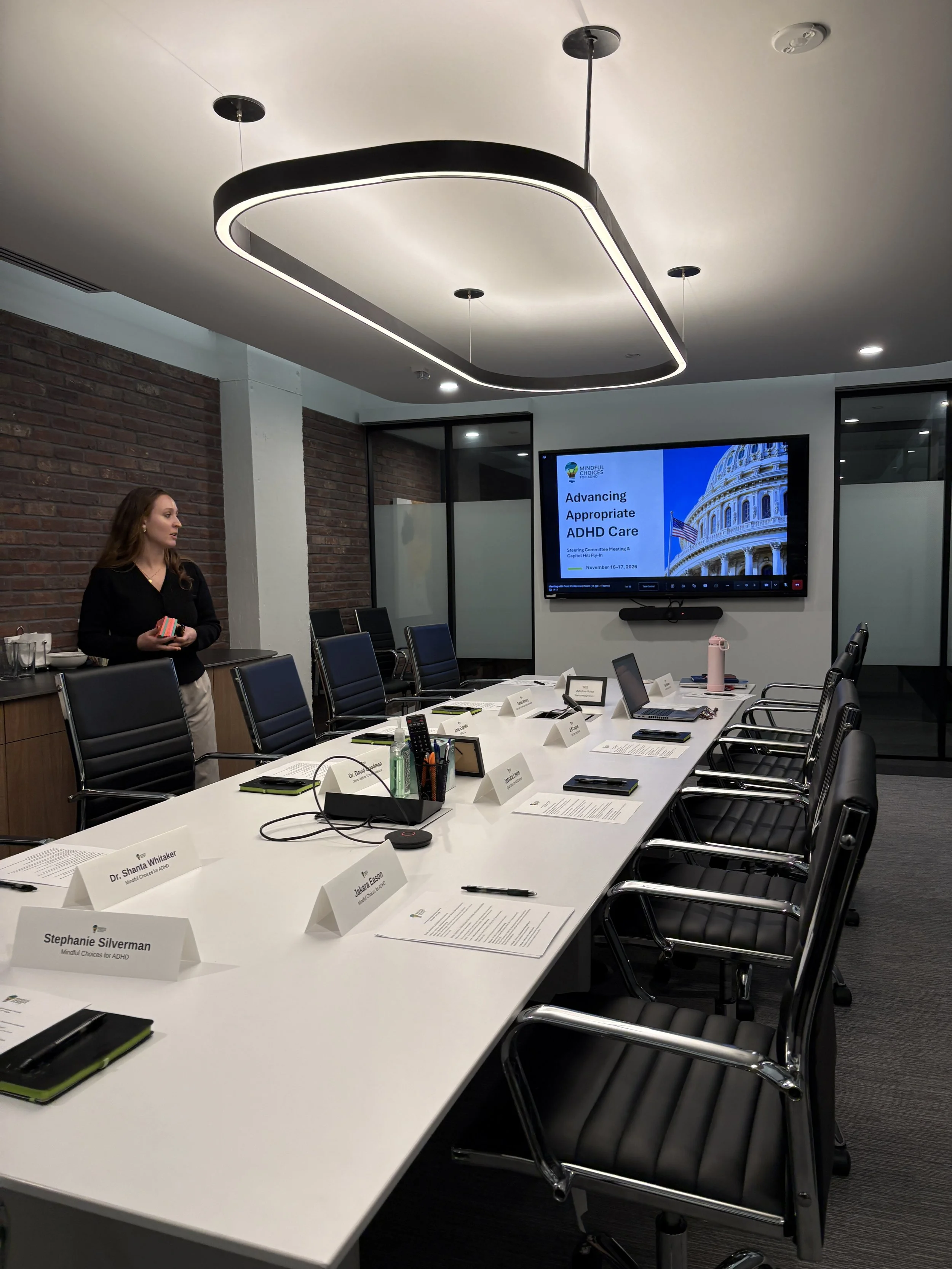
The Steering Committee gathered Monday evening in downtown DC for a welcome dinner. The team walked us through the current political landscape, what to expect in each office, and how to tell a story in the few minutes a staffer has. I'm glad they went into so much detail.
I have to take notes to keep my mind from wandering, and they must have known, because every place setting had a neat notebook and pen. Perfect! I also downloaded the slides and added them to Claude so I can come back to all of it later. My brain doesn't hold information the way it used to, so I lean on digital tools to do the remembering for me.
Near the end of the night, Dr. David Goodman asked for a short break and came back with jars of candy he found in the lobby! We all welcomed the chocolate break and finished strong.
Tuesday Morning: ADHD 101 on the Hill
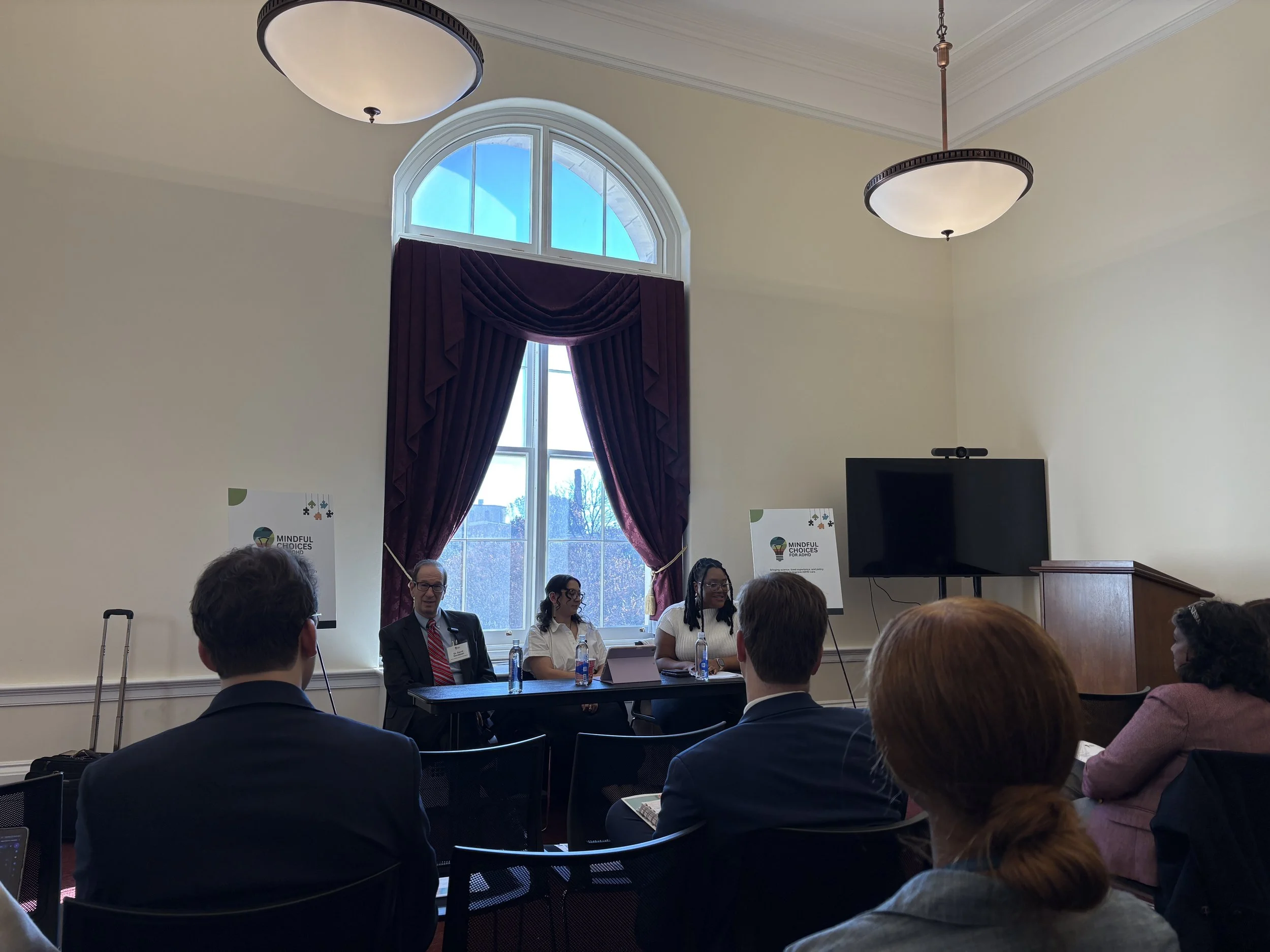
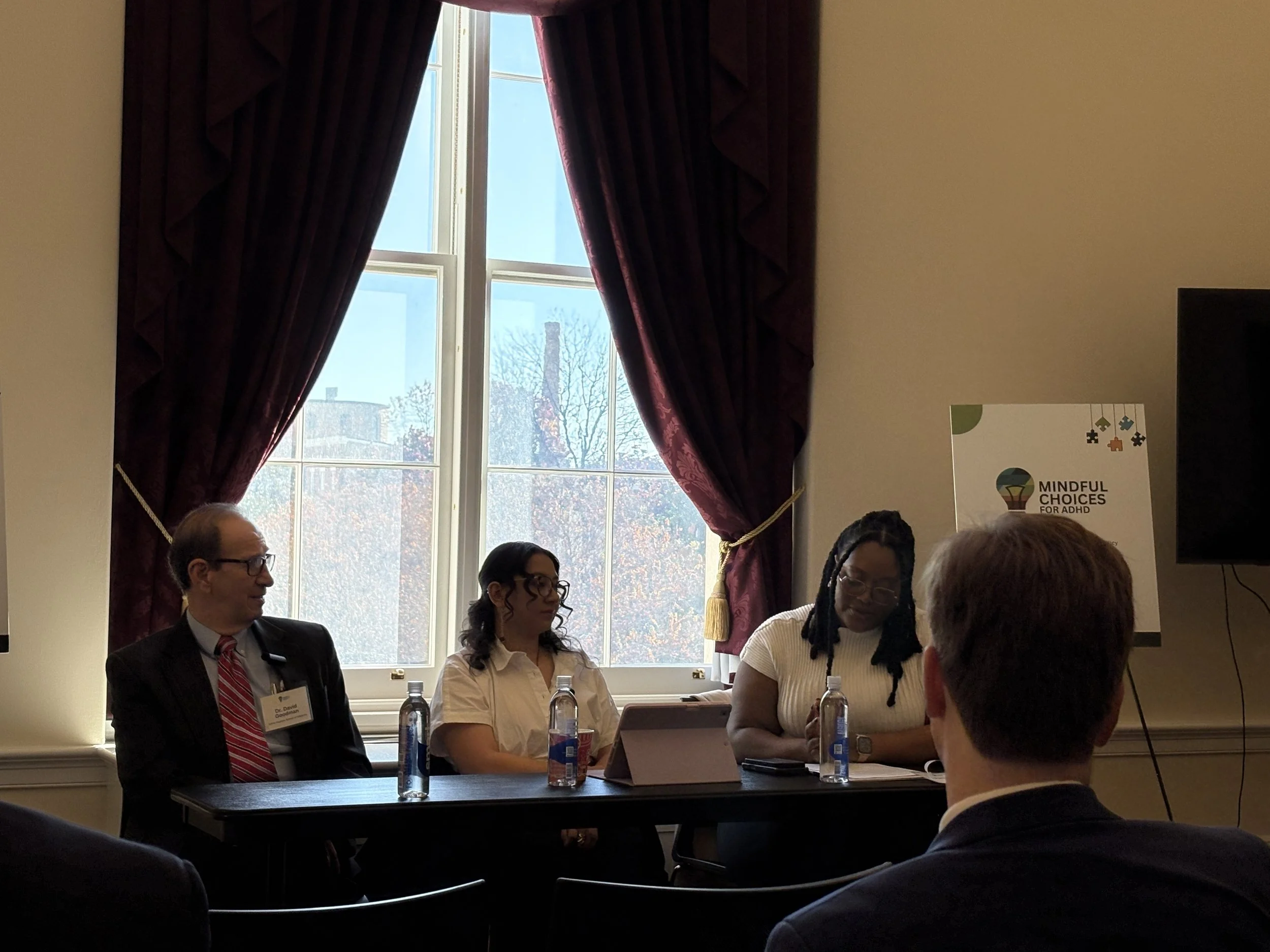
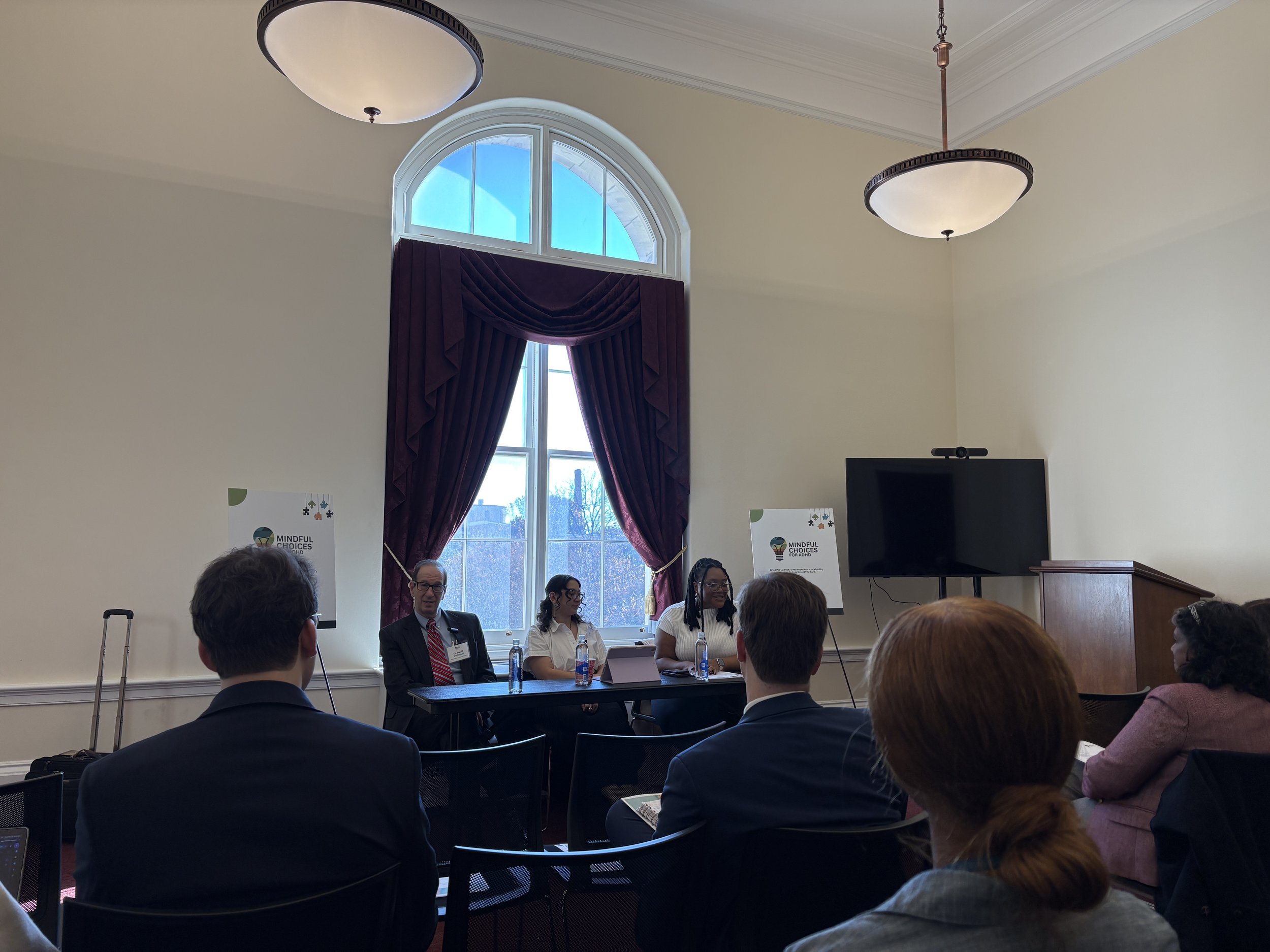
The day opened with a Congressional briefing in the Cannon House Office Building: ADHD 101: Breaking Down Barriers to Diagnosis and Care. Mindful Choices hosted it in partnership with the Bipartisan Mental Health Caucus. The panel brought clinical and patient perspectives together: Dr. David Goodman of the Johns Hopkins University School of Medicine and Tania Calle of HealthyWomen. They talked through what makes ADHD hard to recognize, hard to diagnose accurately, and hard to treat well: gaps in clinician education, barriers to treatment access, and how much families need reliable, evidence-based information to make their own decisions about care.
Four Offices in One Afternoon
Then we split up and went door to door. Steering Committee members from across the ADHD community, clinicians, coaches, advocates, and people with lived experience, brought what we know into Congressional offices. Our team had four meetings with Congressional staff.
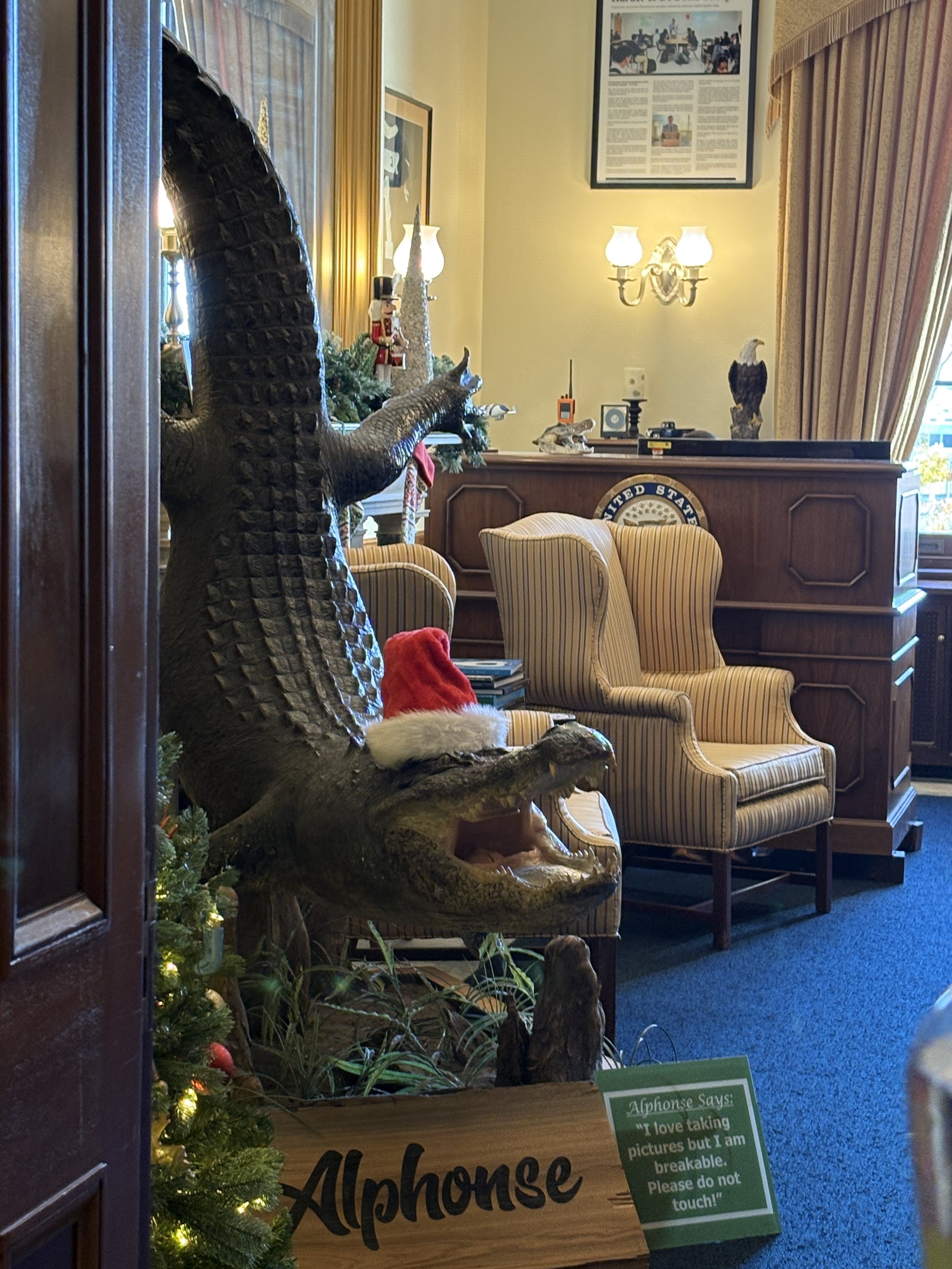
Rep. Mike Kelly (PA-16). This one was personal. Rep. Kelly represents my corner of Northwest Pennsylvania. He co-chairs the bipartisan Congressional Mental Health Caucus and sponsors legislation to streamline prior authorization, so we thanked his office for that work and connected it to what ADHD families face. I loved spotting Hershey's bars and a Channellock sign in his office. (Meadville, PA, baby!)
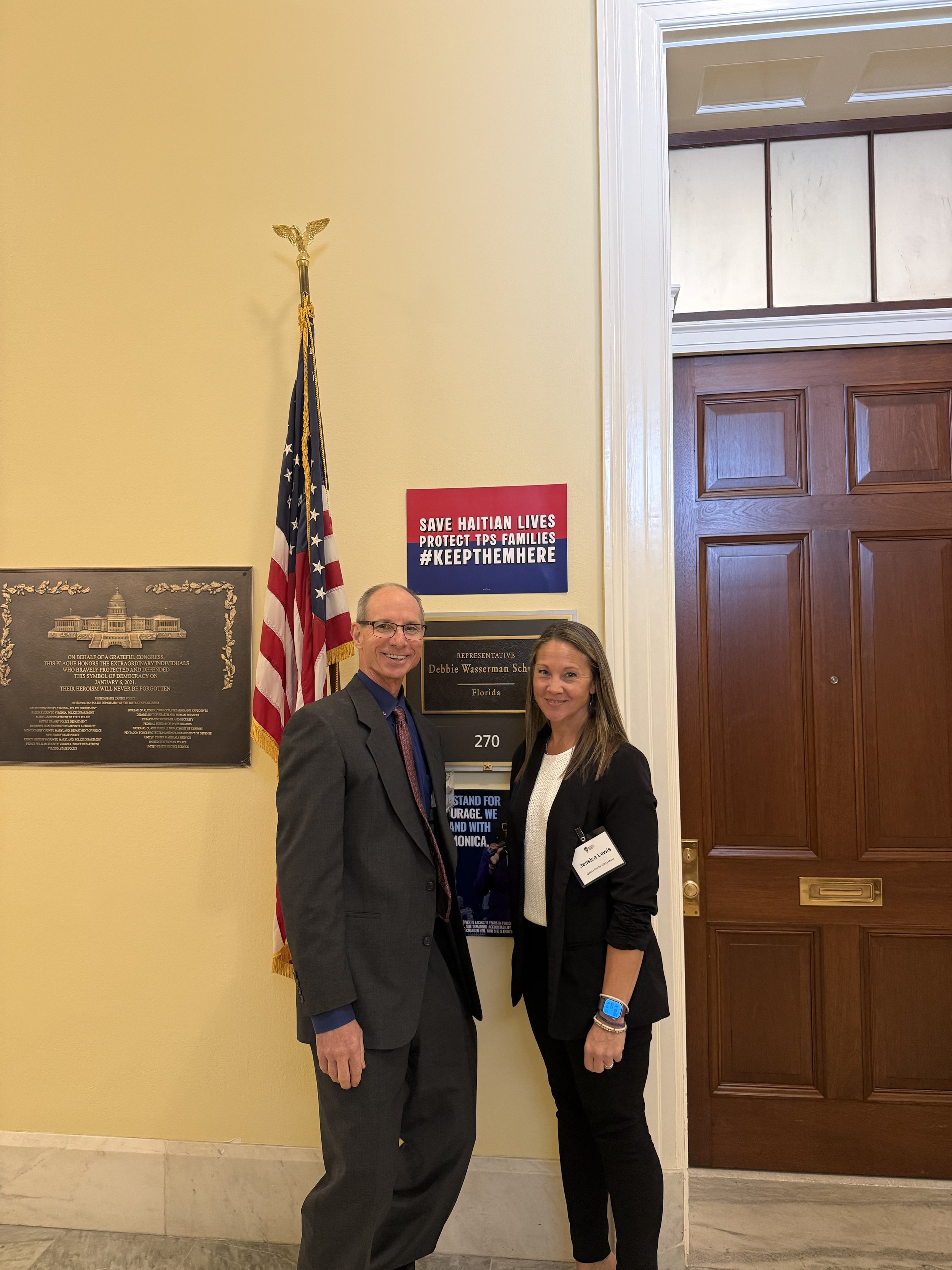
Rep. Debbie Wasserman Schultz (FL-25). Jeff led here as a Florida resident. Because she sits on the House Appropriations Committee, our main ask was funding for ADHD research and public education at the CDC.
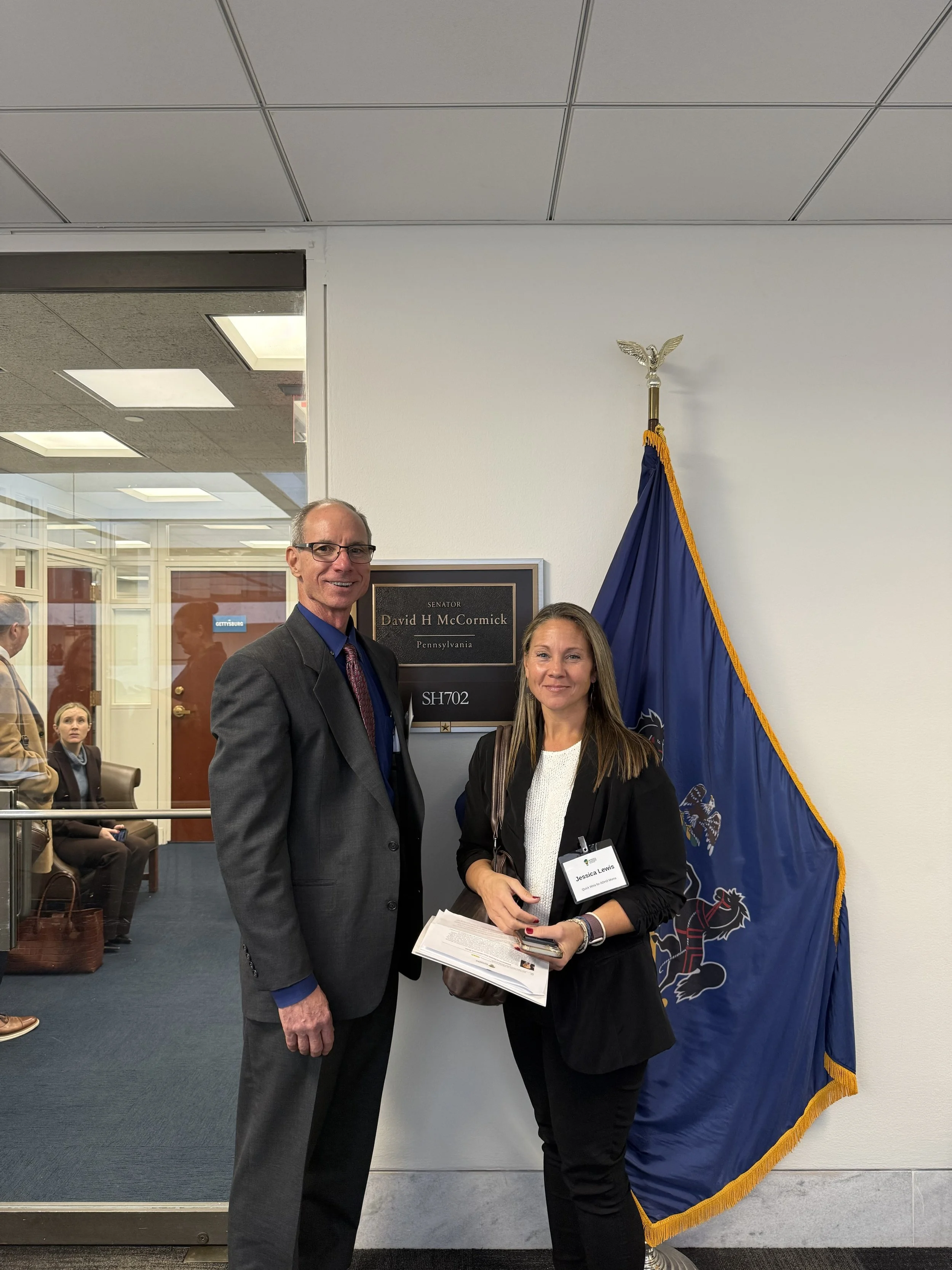
Sen. Dave McCormick (PA). My senator, and another chance to bring a Pennsylvania family's story into the room. More Hershey's chocolate here, plus a beautiful cutting board made from a mix of Pennsylvania hardwoods. Even the doors told a story, with rooms named for Pennsylvania places like Gettysburg and Valley Forge.
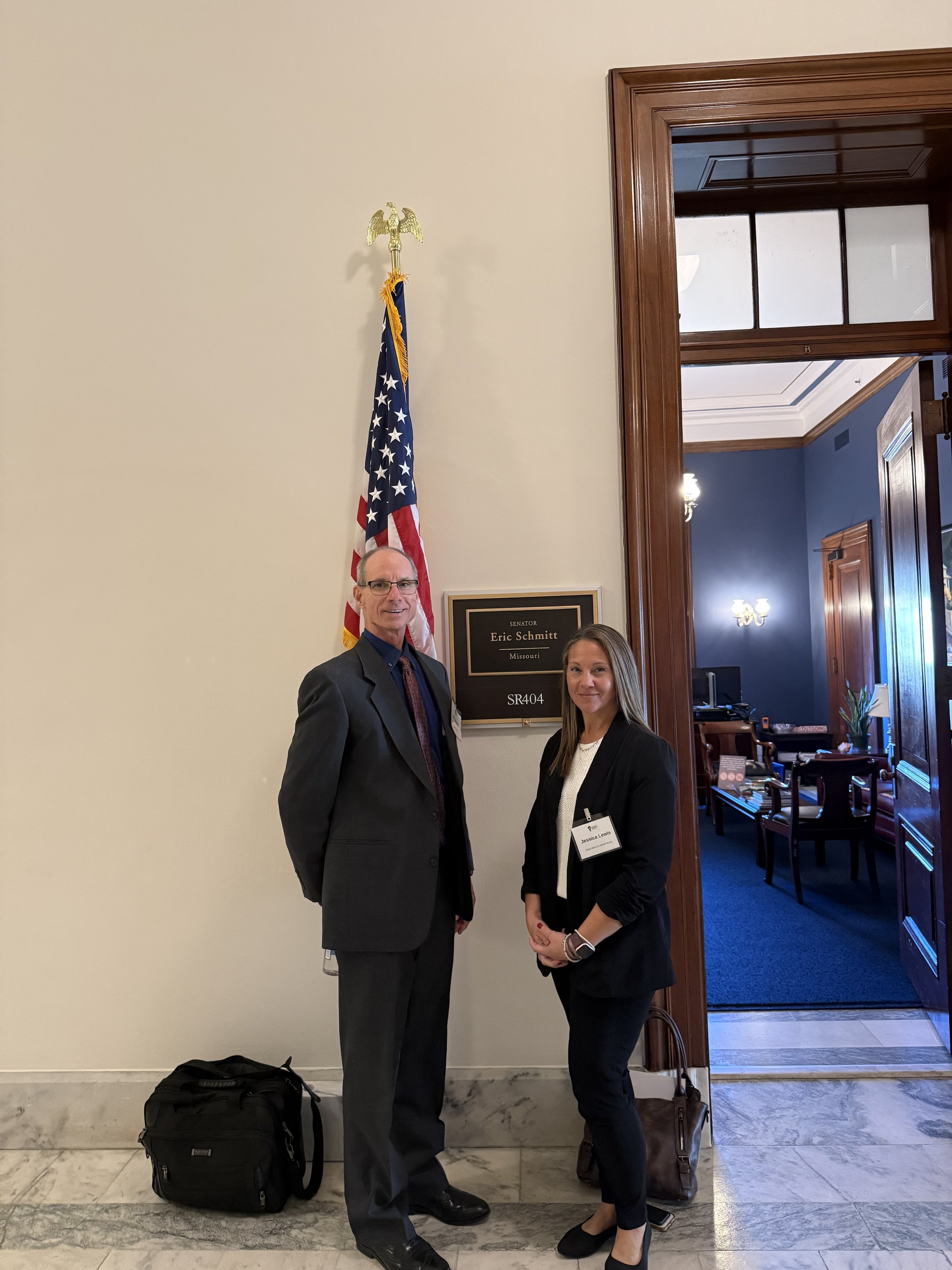
Sen. Eric Schmitt (MO). Our final meeting of the day. The staffer we met has friends with ADHD and told us he hadn't heard anyone bring up ADHD in this setting before. He was glad to listen and open to talking about what working together could look like.
What We Asked For
We went in with two asks.
Fewer prior authorization roadblocks. Prior authorization means your insurance company has to approve a treatment before it will cover it. In ADHD care, that can delay a new prescription, interrupt a plan that was working, or bury families and clinicians in paperwork. We shared stories of delays in getting prescribed medication, interruptions in treatment that was working, and the administrative weight it puts on patients, families, and clinicians. Our point was simple: ADHD care needs to fit the person, and patients need timely access to the treatment their clinician decides is right for them. There is room to improve the process while still supporting appropriate prescribing and continuity of care.
Protect and grow CDC funding for ADHD. The CDC has a small, dedicated ADHD funding line. It pays for public health data, research, and evidence-based educational resources for individuals, families, and health care professionals. That line has sat at $1.9 million for years, with no adjustment for inflation or the rising cost of living. We asked Congress to preserve it and double it to $3.8 million in the final 2027 budget.
Mindful Choices is also pushing for better clinician training, especially for young adults aging out of pediatric care, and for more research into objective diagnostic tools.
Why This Matters to You
If you've ever waited days for an approval while your child's school week fell apart, or spent an afternoon on hold with an insurance company instead of with your family, you've felt these policies firsthand. That is a design problem. And design problems at this level get solved when the people making the decisions hear from the people living with the results.
You don't need to be a policy expert to be part of that. Your story counts. Mindful Choices is collecting ADHD stories to help make policy more informed and more responsive to the people it serves. You can share yours at choicesforadhd.org or by emailing isa@choicesforadhd.org. Mine was one of many in those offices on Tuesday, and every one of them carried weight. Yours does too.
I'm so thankful for the chance to be a voice for people with ADHD.
Thank you for reading, and be sure to check out the podcast too!
